- 0086-571-85302990
- [email protected]



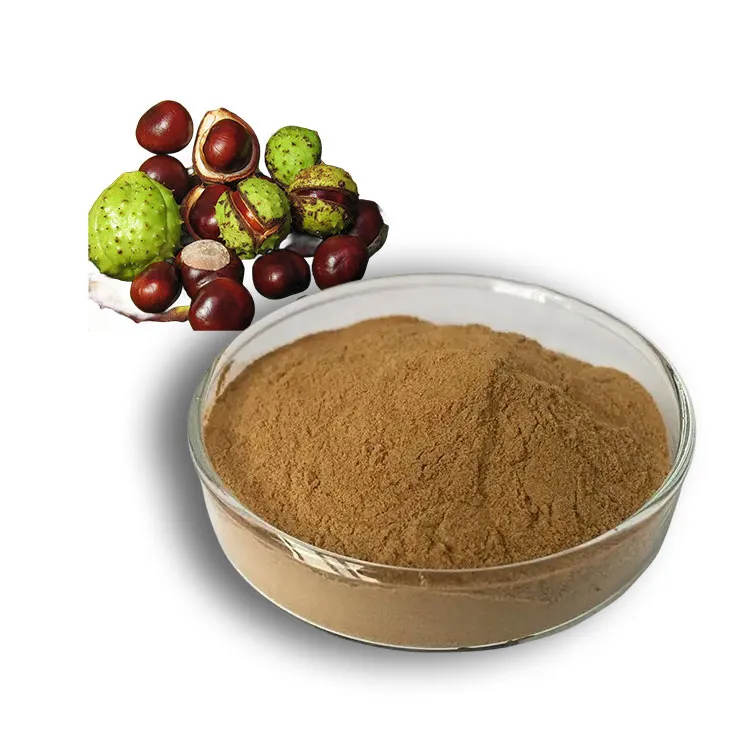
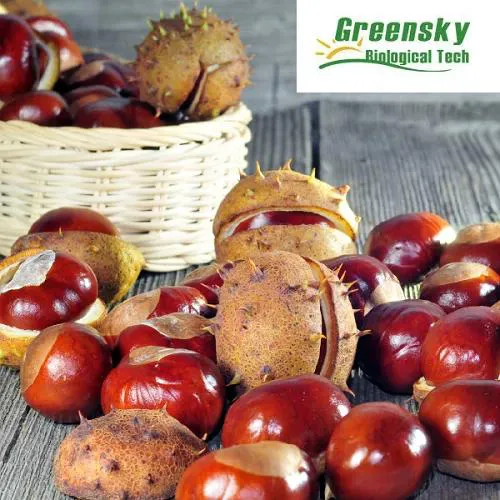
Horse Chestnut Extract
Introduction
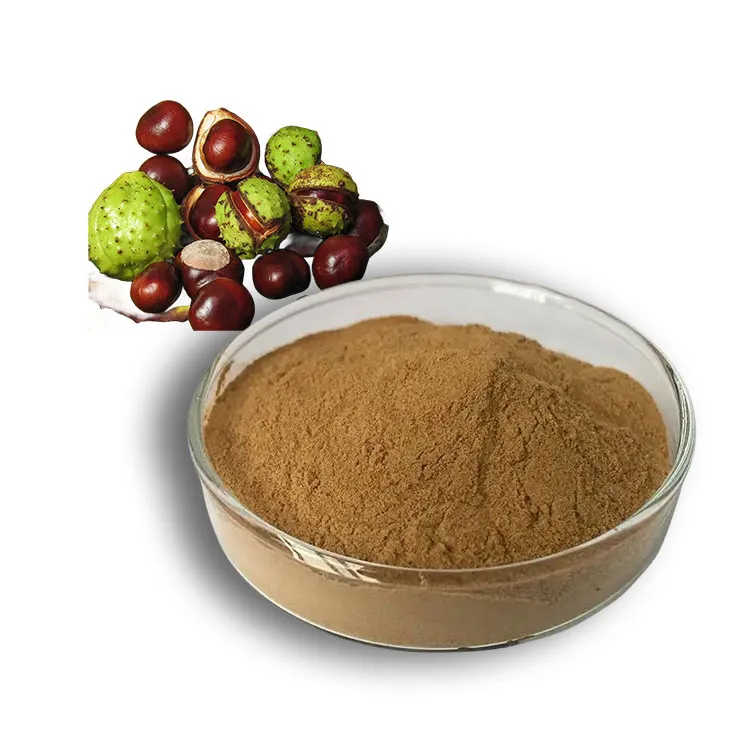
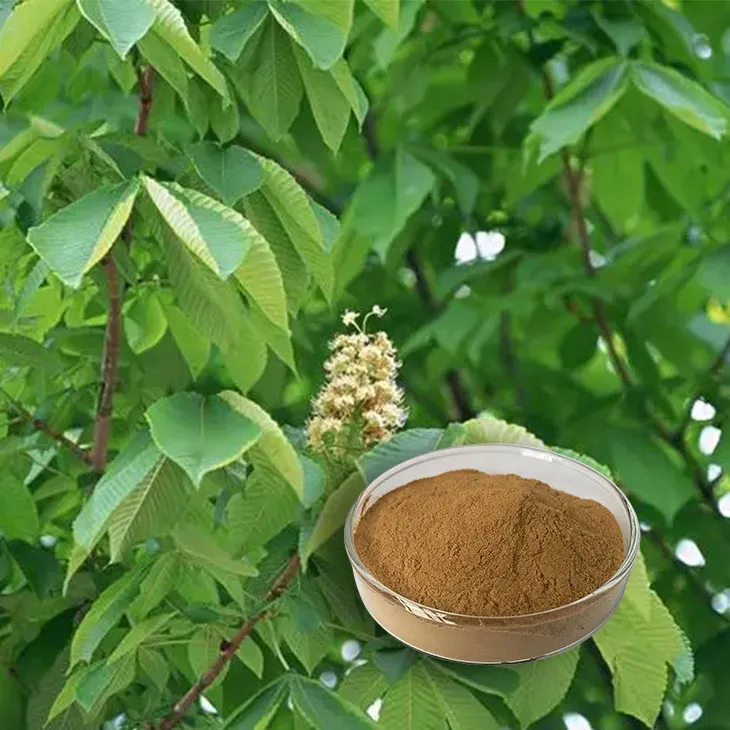
The Horse Chestnut tree (Aesculus hippocastanum) has been a fixture of European herbal medicine for centuries, with its seeds long recognized for their remarkable benefits in supporting venous and circulatory health. The standardized extract of horse chestnut seed, rich in the active triterpene saponin known as aescin (also called escin), has become one of the most clinically validated botanical ingredients for chronic venous insufficiency (CVI) — a condition affecting an estimated 20–40% of adults worldwide. Today, horse chestnut extract is a cornerstone ingredient in the global vascular health supplement market.
Part 1: What Is Horse Chestnut Extract?
Botanical Profile
Scientific name: Aesculus hippocastanum L.
Family: Sapindaceae
Origin: Native to the Balkan Peninsula; now widely cultivated across Europe, North America, and parts of Asia
Part used: Mature seeds (conkers)
Extraction Process
Seed preparation: Dried seeds are dehulled and milled
Solvent extraction: Typically ethanol–water mixture extraction
Esculin removal: Critical step — raw seeds contain toxic esculin; quality extracts must reduce esculin to ≤0.1%
Concentration & standardization: Vacuum concentration and standardization to target aescin content
Drying: Spray-drying to produce a standardized powder
Key Active Components
Component Description Aescin (Escin) Mixture of triterpene saponins; the primary active constituent; typically standardized to 20%, 40%, or 98% Flavonoids Quercetin, kaempferol, and rutin glycosides; contribute antioxidant activity Tannins Condensed tannins (proanthocyanidins); astringent properties Coumarins Aesculin (must be minimized), fraxin, scopoletin
Specifications We Offer
Specification Aescin Content Testing Method Typical Application Horse Chestnut Extract 20% 20% Aescin (UV) UV spectrophotometry General supplements, topical formulations Horse Chestnut Extract 40% 40% Aescin (UV/HPLC) UV & HPLC Premium venous-health capsules Horse Chestnut Extract 98% 98% Aescin (HPLC) HPLC Pharmaceutical intermediate, research
Safety: Esculin Control
Raw horse chestnut seeds naturally contain esculin, a coumarin glycoside that is toxic in significant amounts. Quality manufacturing includes a dedicated esculin-removal step. We guarantee:
Esculin content ≤ 0.1% in all finished extracts
Batch-specific testing for esculin via HPLC
Full compliance with European Pharmacopoeia (EP) and USP monograph requirements
Quality Testing
Aescin content quantification (UV and/or HPLC)
Esculin verification (must be ≤0.1%)
Heavy metals (Pb, As, Cd, Hg) per pharmacopoeial limits
Pesticide residue screening (EU MRL compliance)
Microbiological testing (TAMC, TYMC, E. coli, Salmonella, Staphylococcus)
Aflatoxin screening (B1, B2, G1, G2)
Moisture content and loss on drying
Part 2: Core Benefits & Mechanisms of Action
1. Chronic Venous Insufficiency (CVI) Support
Horse chestnut extract is the most extensively studied botanical ingredient for CVI — a condition characterized by varicose veins, leg swelling, heaviness, and pain. Aescin strengthens venous walls, reduces capillary permeability, and improves venous tone.
Research: A systematic review by Pittler & Ernst (2012) in Cochrane Database of Systematic Reviews concluded that horse chestnut seed extract (HCSE) is an effective and safe short-term treatment for CVI, with efficacy comparable to compression stockings.
2. Anti-Edema & Anti-Swelling Action
Aescin inhibits the activity of hyaluronidase and other hydrolytic enzymes that degrade the glycosaminoglycan layer of capillary walls, thereby reducing fluid leakage into surrounding tissues and alleviating edema.
Research: Sirtori (2001) in International Angiology reviewed the mechanism, noting that aescin reduces capillary filtration by sealing endothelial cell junctions and inhibiting leukocyte activation.
3. Anti-Inflammatory Activity
Aescin modulates inflammatory pathways by inhibiting NF-κB activation, reducing prostaglandin E2 (PGE2) synthesis, and suppressing the release of pro-inflammatory cytokines (TNF-α, IL-6).
Research: Facino et al. (1995) in Pharmacological Research demonstrated that aescin significantly inhibits inflammatory mediator release in both in vitro and in vivo models.
4. Topical Applications — Bruising & Post-Surgical Recovery
Topical horse chestnut extract (gel or cream) is used to reduce bruising, swelling, and discomfort following surgery or trauma. The localized anti-inflammatory and venotonic properties accelerate recovery.
Research: A randomized, double-blind study (Matsui et al., 2003) found that topical 2% aescin gel significantly reduced swelling and pain after aesthetic surgery compared to placebo.
5. Antioxidant Protection
The flavonoid fraction of horse chestnut extract provides free-radical scavenging activity, complementing the venotonic effects of aescin with cellular-level antioxidant protection.
Part 3: Wide-Ranging Applications
Dietary Supplements & Nutraceuticals
Capsules and tablets targeting venous health, varicose vein support, and leg comfort
Standard daily dose: 100–150 mg of aescin (equivalent to approximately 300–600 mg of 20% extract or 125–375 mg of 40% extract)
Combination products with Diosmin, Hesperidin, butcher's broom, or grape seed extract (OPC)
Topical & Dermatological Products
Anti-cellulite creams and gels leveraging the anti-edema properties
Post-surgical recovery gels for bruise and swelling reduction
Leg-relief creams for varicose vein discomfort
Eye-contour serums targeting puffiness and dark circles
Sports Nutrition & Recovery
Post-exercise recovery formulations for athletes experiencing muscle soreness and localized swelling
Compression-sportwear companion products
Veterinary Applications
Equine supplements for supporting leg and hoof circulation
Canine joint and circulatory health products
Pharmaceutical & Clinical Use
In Europe, standardized HCSE is available as an over-the-counter (OTC) medicinal product
Pharmaceutical-grade aescin (98%) used in injectable formulations in some markets
Active pharmaceutical ingredient (API) for prescription venotonic medications
Part 4: How to Choose a High-Quality Horse Chestnut Extract Supplier
Aescin Standardization & Testing Method
Confirm the testing method: UV spectrophotometry (for general grades) or HPLC (for pharmaceutical grades)
UV methods may overestimate aescin content compared to HPLC — clarify with your supplier
Request the full HPLC chromatogram for 40%+ grades
Esculin Content Verification
This is a critical safety parameter. Esculin must be ≤0.1%
Request batch-specific esculin test results
Ensure the supplier has a validated esculin-removal process
Pharmacopoeial Compliance
European Pharmacopoeia (EP) monograph for Aesculi semen extract
United States Pharmacopeia (USP) dietary supplement monograph
Chinese Pharmacopoeia (ChP) for seven-leaf saponin standardization
Raw Material Sourcing
Confirm the botanical origin (Aesculus hippocastanum — not other Aesculus species)
European-sourced seeds (Balkan region) are generally considered the gold standard
Verify sustainable wild-harvest or cultivated sourcing practices
Pesticide & Contaminant Screening
Horse chestnut is susceptible to pesticide contamination; full pesticide panel testing is essential
Aflatoxin screening is critical due to the seed's natural moisture content
Request complete contaminant test reports with each batch
Part 5: About Our Company
We are a trusted supplier of standardized botanical extracts with a strong focus on quality, traceability, and regulatory compliance. Our Horse Chestnut Extract portfolio includes:
Three specification grades: 20%, 40%, and 98% aescin to match your application and cost requirements
Rigorous esculin control: Every batch tested and guaranteed ≤0.1% esculin
Full regulatory documentation: EP, USP compliance certificates; Kosher, Halal; allergen and GMO-free statements
Advanced analytical capabilities: In-house HPLC for aescin and esculin quantification, with third-party validation available
Technical support: Formulation guidance for oral and topical applications; stability data; compatibility testing
Customized solutions: Private labeling, custom blending (e.g., with Diosmin or grape seed extract), and tailored particle sizes
Reliable supply: Consistent raw material sourcing from approved European suppliers with strategic inventory management
Conclusion & Call to Action
Horse Chestnut Extract is a scientifically validated, regulatory-supported, and commercially proven ingredient with established applications in venous health, topical skincare, and sports recovery. Its strong clinical evidence base and well-understood mechanism of action make it an attractive choice for supplement formulators seeking credibility and efficacy.
Interested in Horse Chestnut Extract for your product line? Contact us today for competitive pricing, free samples, and expert formulation support. Whether you need standard 20% extract for general supplements or pharmaceutical-grade 98% aescin, our team is here to help.
Get a Quote | Request Free Samples | Technical Consultation
| Specification Item | Description |
|---|---|
| Product Name | Horse Chestnut Extract |
| CAS Number | 6805-41-0 |
| Appearance | Brown powder |
| Specification | 20% Aescin |
| Form | Powder |
| Source | Extracted from the seeds of the horse chestnut tree (Aesculus hippocastanum) |
| Applications | Pharmaceuticals, dietary supplements, cosmetics |
| Storage Conditions | Stored in a cool, dry place, avoiding exposure to sunlight and moisture |
| Packaging | Safe and compliant with transport standards |
| Supply Capacity | Customized based on demand |
| Shipping | Express/Air/Sea |
| Delivery Time | Dependent on order volume and destination |
| Price | Based on specifications and demand |
| Minimum Order Quantity | Contact for quotation |